 Chloe Parker
Artificial intelligence has dominated tech headlines for years, with Google, OpenAI, and Microsoft pouring billions into development. Yet results remain uneven: Google's AI answers can be wildly inaccurate, AI-generated images are riddled with errors, and chatbots still feel robotic. But one man predicted this surge decades ago.
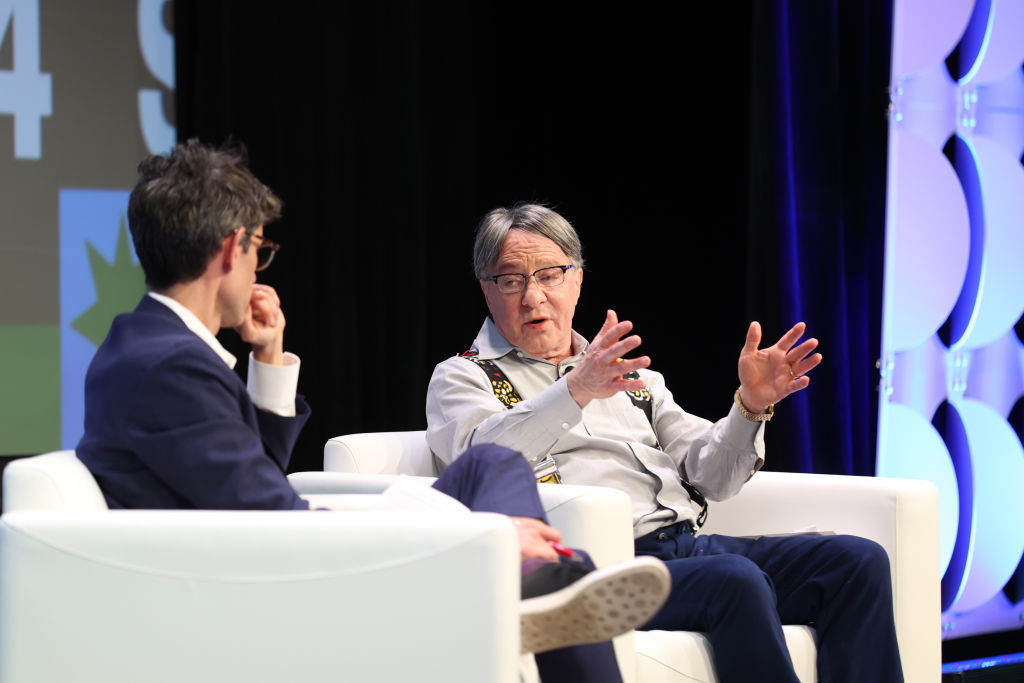
The Guardian recently interviewed Ray Kurzweil, a futurist and Google's principal researcher and AI visionary. Kurzweil is best known for his 2005 book The Singularity is Near, which predicted human-level AI by 2029 and the merging of human consciousness with AI around 2045. His new book, The Singularity is Nearer, doubles down on those forecasts.
Kurzweil stands by his timeline. "2029 remains accurate for both human-level intelligence and artificial general intelligence," he told The Guardian. He admits AI may take a few extra years to surpass top humans in writing Oscar-winning screenplays or generating deep philosophical insights, but "eventually it will."
The real shocker comes with his vision of the Singularity. "We're going to be a combination of our natural intelligence and our cybernetic intelligence," Kurzweil said. "Brain-computer interfaces will use nanobots — robots the size of molecules — that go noninvasively into our brains through capillaries. We are going to expand intelligence a millionfold by 2045."
Critics dismiss such claims as hubris. "We don't even understand how our own brains work," noted one observer. "Injecting nanomachines into people's brains sounds like a recipe for disaster."
Kurzweil acknowledges skepticism: "People say 'I don't want that,' but they thought they didn't want phones either." He argues that costs will drop, just as mobile phones became affordable. "About three quarters of people in the world have one… this issue goes away over time."
Live Forever
"My first plan is to stay alive, reaching longevity escape velocity. I'm also intending to create a replicant of myself. I take about 80 pills a day to help keep me healthy. Cryogenic freezing is the fallback."
— Ray Kurzweil
Kurzweil's book includes a chapter on "perils," but he remains relaxed about doomsday scenarios. "We do have to be aware of the potential here and monitor what AI is doing. But just being against it is not sensible: the advantages are so profound. All the major companies are putting more effort into making sure their systems are safe and align with human values than they are into creating new advances."
Not everyone buys that. "I straight-up do not believe that big tech prioritizes safety over advancement," said one tech analyst. "Silicon Valley's 'move fast and break things' ethos perfectly encapsulates the current AI craze."
Kurzweil's most audacious claim: immortality. "In the early 2030s we can expect to reach longevity escape velocity where every year of life we lose through ageing we get back from scientific progress," he said. "As we move past that we'll actually get back more years. It isn't a solid guarantee of living forever — there are still accidents — but your probability of dying won't increase year to year. The capability to bring back departed humans digitally will bring up some interesting societal and legal questions."
AI raising the dead? Kurzweil is serious. He plans to create a digital replica of himself: "I did something like that with my father, collecting everything he had written, and it was a little bit like talking to him." The phrase "a little bit" does heavy lifting — the replicant was not, in fact, like his father.
The interview ends on a note of inevitability: "It is not going to be us versus AI: AI is going inside ourselves."
Kurzweil remains a hugely respected figure in AI, but his vision strikes many as dystopian. In 10 years, nanobots may extend our lifespans; in 20, we could become human-hardware hybrids with brains dominated by software we don't control. And the dead will be resurrected as digital avatars.
AI today is defined not by what it does, but by what its advocates promise. Kurzweil may be right. But for many, the idea of injecting nanomachines into their brains or resurrecting relatives as ghoulish software approximations is deeply unappealing. As one critic put it: "This whole philosophy is as mad as a badger in a cake shop, and will end just as well."